‘And Lo, for the Earth was empty of form and void.
And Darkness was all over the Face of the Deep.
And We said: Look at that fucker Dance.’
—Infinite Jest, David Foster Wallace
CHAPTER 1
We suppose
a day in the life of
a drunken, drowning hero,
afflicted by bebop and seeking order:
he sleeps, he dreams, he wakes, then slumps his way to work
dreams some more, receives messages from old friends, makes new friends,
falls back to his bed, wakes again, and imagines one ending;
all the while
seeking meaning or, failing that, maybe solace,
or at least a little
irony.
A. Secret Dreamer No. 1
{Welcome. Sit back. Relax. We are glad to have you with us. If this is your first time, close your eyes; breathing deeply seems to help the nausea and anxiety which oft-times accompany the initial disorientation. For those more experienced, you may want to look out the windows again. On the right, you’ll be able to see something interesting soon.
Look now: sudden order, a visual pattern of crystals precipitating out of the dreaming, swirling radiance — our own Big Bang. On initial approach, all was confusion: splintered tumult and wild-particle light. But now, descending, we see order resolving out of that chaos as a matter of scale and proximity; each winking light fixing itself as an integral pixel of that strange and attractive object. And something else — from above, this structure seems aware and industrious, a hive of light and responsibility, implying creatures down there, awake and looking for something. Down ... down ... wheeling further yet, down ... we focus down on the rim of that luminescence. There, at the glittering outskirts of this new universe, we will select a point at random; seemingly at random (is anything random?) spinning, looping through time and space and gravity, we glide down, there: a galaxy, then a system. And ... a cooling planet.
Each of you, please, cast your vote on your panel in front of you. There are no wrong answers — choose. Don’t worry, all choices will be in there, and there’ll be some surprises too. Our patented Q~AI-TMTM tech takes your inputs and distills into something for everyone. The Tour begins at the moment of selection — when all possibilities collapse. You’ll see. Locked in? Yes? Alrighty. Now here we go. (Ahhh ... I love this part.)
What year did we all choose? The readout says ... 1984! Wow, a tremendous time! Lots of fun! Much to do and see there. Hey, and it’s a Leap year too — everything a little out of phase, a ‘Day Late and a Dollar Short’ all year long. You’re definitely my favorite group in a long while. Down, further down now, we are locking on: there ... a continent, now a region, then a city and ... and we choose a window. There! That one. Yes. We are committed. Enjoy!}
*
Inside a third-floor apartment, there sits a man in a chair, trapped by a conic-section of the cold light cast down by a single over-the-shoulder lamp. In the room’s corner — {over there, see?} — stands a long column of metal, snaking in curves of articulated brass architecture with pearled buttons studding its length and ending in the dark bell of hollow promise. Ah, a saxophone! At the man’s feet is a white dog, all white (except for that one black-tipped ear), a short and thick-set dog with almond eyes — watching the man expectantly, warily, lovingly. We can see that the man has something in his hand: a tumbler held obliquely, ice geometries floating in dusky liquid. He takes a drink, stares ahead through the window. It is very late. What can he be thinking?
(.... what? ... learning how things are done ... & ... & learn luck too. Something else, I think ... what was it? ... I need some sort of order, directions, instructions. Just tell me what to do. [Sudden focus:] I gotta get organized, then work hard. Figure out the firing sequence. Get some sort of good break to go with that new leaf. That’s what I need: the discipline of a system. Get organized!)
The man’s head bobs and his eyelids droop every now ... every then. He twists his neck slightly to the side. Is he listening to something?
( ... in the glass & in the whisky & there: in my ragged reflection in that midnight window — in all, bubbles float upwards, driven by some new gravity that curves our motives to its intent. Thinking of ... then blanking out for minutes ... for hours ... maybe lifetimes negligently missed through inattention. Nightmare voids in the middle of everything. Just when I think ... [Again, sudden focus:] I’ve got to learn something quick.)
The man jerks his head suddenly, sideways, as if trying to escape something. The dog’s head jerks in sympathy.
(... messages, just out of reach, on the other side of sensibility & echoes of mumbling voices carrying words in some other language. It’s the game with rules, and luck and a Prussian loyalty to the way things are done; all the things that I can’t learn are out there, sometimes so close. But change my ways, love discipline & fix the mind & face to mimic their secret methods, the way they’ve got it all organized ... then ... & then ...)
The man pushes himself up from the chair and stumbles over to the slumbering saxophone, picking it up. He takes a slender piece of wood from a shot glass on a nearby shelf and puts it in his mouth, soaking it to saliva softness while he walks unsteadily, crazily, fundamentally to another part of the room. He touches a few buttons on the front of a stereo — green lights wink up — puts the tonearm on a vinyl-black rotating disk and music approaches his ears. The dog, watching all, quietly swings his head along the arc of the man’s movements, full attention given by this animal agent. He has genetic memories of staying close to man and fire; waiting for the fruits of their partnership, waiting for direction and ready to raise the alarm and defend.
Out of the speakers blasts a clarion announcement of freedom from a punching alto sax, the thirteen-note intro to Parker’s Mood, then a caroling piano links to the sax and plays an almost squarish and maudlin head, until two sudden, orbital runs bubble out with interrogative chaos and then it’s just Charlie Parker taking the chords apart and putting them back together in astonishing, yet perfect sonic genius.
The man sits back in his chair, placing the reed, listening to the piano again, his head slightly tilting, keeping the beat, waiting for that second solo to come around and hook deeply into him; thinking maybe he can relive that one time he played it perfectly, that time — years ago, when there was no gap between he and Bird for forty-nine seconds, tears streaming down his face in the last eight bars.
(“Following the rules will save you,” they said. I remember: they told us that. That every question had an answer. At least it was implied. Everything’s hidden from view though – camera obscura something-or-other. But find those secret codes, learn the secret words & keys which open their secret doors & hidden panels to ... to where?)
Here the man’s head slumps down to his chest, his eyelids close and head continues to move just slightly to the music, or possibly to the rhythm of his own breathing. The dog comes and nuzzles at the hanging hand for whisky flavored ice cubes.
—No! Get away Zero! Go lay down. I’m in no shape to take care of you if you get drunk again.
The dog shambles to the corner and collapses with a grunt, triangular head pressing down on forepaws. His eyes are accusing and flinty torpedoes.
(Secrets. Secrets ... thinking of ... dreaming of ... the key of B-flat; that’s a blues key, sinister, the blues ... crossroads and deals made ... secret keys to hidden doors leading to something I need. Cold water sucking me down. Freezing darkness. Sleeping now. Dreaming. Secret dreams. Saxophone solo jazz riffing, the absence of structure that somehow satisfies, apparent randomness until you catch that unexpected underlay of organization leaping out – Ahh! Breath sucked in with discovery, like a puzzle suddenly solved, a distant campfire seen in the cold night...you only need to tune your mind to think differently …That horn! Learning to play by ear, blowing & howling at the night.)
It seems that hours may have passed when the man again opens his eyes, looks around, hears the record tic-tic-ticing its final spiral of eternity in the heartbeat night. He stares dumbly ahead: the song is gone, the solo carelessly wasted. Another chance missed in a lifetime of missed chances. He stands, picks the horn up from where it lies on the floor, returns it to its stand in the room’s corner and stumbles to bed, where he flops down, falls asleep, and dreams hidden, scripted nightmares telling him the truth about all that past (and the future too), teaching him things which he forgets as soon as he wakes:
Then remember, this is how you come awake after a hard night:
->>>BLEET-BLEET-BLEET-BLEET-BLEET-BLEE——!
· Hand smashes down to stun killer blare of alarm clock mania;
· Fifty-pound steel mauls ring out against the side of the head;
· Glue-factory sludge in the mouth and the world turned down to a clear spot of video-blue, edged in Vaseline;
· Bedside white dog opens one eye, regards the cursing, spitting human and wonders if he should move out of harm’s way;
· Heart blurts into a cha-cha cadence;
· Brain beats awarely.
And the only thing you can recall from last night is too much liquor (again), stepping on the dog’s tail as you got up to vomit in the toilet, and the word “Organization.” A drunken memory of significance tells you that your life needs a system; an organizing principle. But then, the whisky makes you think too much; makes you imagine solutions and meanings that aren’t there; when it may be too late for anything now. Thus, here — survival mode — you try to imitate someone’s newsreel morning routine [Choose Best Answer]:
a) shave ->shower ->toothpaste ->breakfast->dress.
b) breakfast ->toothpaste->dress->shave->shower.
c) Drano gargle->necktie knotted from the light fixture->shaving the wrists oh-so-closely-> unfortunate bathtub/toaster accident.
d) All of the above.
(Whatever. Whatever will work, works. Shit! That sax is lying on the floor again; damn, look at that! Another reed shot, teeth marks there: I’m a nightmare maniac bruxist!)
The man struggles through this, bumping into things, cursing. And the dog watches all, his one black-tipped ear cocked alertly forward and almost a smile showing on his muzzle as he pants away his body heat. He doesn’t move. He watches as the man pulls the door closed behind him, locks it and heads downtown to one of those lives he can choose.
B. Attorney at Lav
Monday. Early morning. Peoria, Illinois. This corn-belt factory town has seen better days. Look at it nestled up there to the scummy western flanks of the Illinois River: all still and peaceful-maybe sleeping ... maybe dying. This map-smudge town has lately become an encapsulated cyst of misery, a localized boil of the massive infection of recession that is just now blowing over in the rest of the country. Chairman Volcker has been playing pinball with interest rates — trying to tame that inflation — and Ronnie Reagan got himself elected again by a landslide, despite the nation’s factories rusting to their foundations and the Japanese eating our lunch. But the crisis is worse here, fueled by those Caterpillar-boyos deciding to copy those Japs —who copied Cat in the first place — and buy their tractor parts somewhere else. So, they won’t be needing those remaindered machinists and welders and fork-truck drivers and hydraulic press operators and millwrights and pipefitters — none of them — back, shamelessly shedding its employees the way you would arbitrage commodities and shift risk on the trading floor. Also, there was the collapse of those other local bulwarks: the Pabst Blue Ribbon brewery and Hiram Walker distillery, and then there’s the massive stockyards on the Southside that don’t smell so bad anymore — farmers turning to corn, soybeans or Government set-asides for dollars — as hogs and cattle are too expensive to raise on any but the largest scale now.
And so: everything that falls apart is connected to something else that wants to fail too, as all the pieces of the Peorian commercial clockwork tick somewhat slower. Laid off and fed-up blue collars drop their house keys on the banker’s desk as they Oakie their way out of town. And if Caterpillar doesn’t need people anymore, then there’s no Cat-workers to buy Oldsmobiles and Fords, and the car dealers won’t buy newer houses and their kids won’t go to college and on and on it goes — all the economic threads loosening, unraveling — the stilling strings of life almost palpable in the slack Downtown daybreak nothingness.
Here it is late May, and the first real horrible days of summer have arrived. The all-too-brief spring has surrendered to swelter even earlier than usual this year, with the past week close to 90° every day and it only seems to be getting ... uh, worse. Early-morning and it isn’t cooking here yet: although by Noon the air will shimmy with heat wriggling off these radiator sidewalks; and by Two, a soggy haze will cling and suck at each movement, plastering the shirt flat to sweat-slicked skin; and by Three O’clock, the forehead will be beaded with moon-drops of perspiration that can’t remember how to evaporate; and by Four the breath comes thick as water, while you gasp and flop about like a fish in the bottom of a Jon boat; and by Five-Thirty, the bleached animated-dead will slog back and forth, mopping brows, yawning, seeking robot respite, seeking a cool breeze, seeking anything, until they finally sink into the velvet crush of their LazyBoys, into their sofas, or onto their knees, and melt into conscious puddles of ooze. But not yet.
Now, the early-morning sun dances over the mica-impregnated sidewalk sparkle, and the air is deceptively still and fresh; the air seems ... expectant ... waiting. It’s as if this were a new day, a pregnant and brightly lit Resurrection-morning where those grave-sodden souls will lift themselves up to the East to begin again in their new bodies.
Roger Fehler, awash in hangover regret and gulping his nausea, doesn’t buy this; he’s seen too many such mornings: at first fat pools of light and promise, but then rendered down to the salts of failure, fatigue and despair. Roger walks the half mile from his apartment to the office to save on parking, a small economy that made sense back in April, but now, with the sudden summer, he’s begun to suspect that whatever he saves on the meter, he pays back in afternoon sweat that soaks through his clothes. Thus, he trudges: sloping his shoulders into the immediate future, frowning with headache behind dark glasses, wincing along the street towards the courageous Downtown and avoiding his doppelgänger reflection in the windows to his right which would plead with him to change things. How would he answer that pathetic double?
(I’m doing all I can just to continue to stand upright and walk, alright? Second chances? That’s fairy-tale territory. We don’t believe in fairy-tales, do we?)
Roger is trapped between the knowledge that once the momentum of your life has reached a certain low-point, nothing can stop it — there’s a bottom to the bottom that is further down than any deliverance can reach, and he’s been there for a while, but then — though he denies it to himself, still denies it deep in his gloom — deep down, under all that fatalistic pessimism there is a splinter of something left deep inside that believes in promises, in rebirths, in surprising dawns springing from those darkest and blackest moments occurring just before. Despite his slouching denial and the deep well of hopelessness he draws from, he still secretly — secretly from even himself — believes in miracles. And why not? — Why else do we continue to breathe?
Roger unconsciously understands that if he actually and openly admitted to himself that he believed in the possibility of salvation, it would somehow spook the appearance of miracles and doom him; miracles, being shy, demand disbelief. They skirt away, like unicorns, if you try to look directly at them. He is sure of this. In his condition, what else is there to hope for but the most fundamental type of apotropaic magic? Magic that demands disbelief, ritual and surprise. And such things always come just after you hit bottom. But how much farther must he fall?
Now the windows on the right give way to the marble-gray, veined flanks of the Peoria Trust & Savings Bank Building — the Trust & Savings Bank (the T&SB!): a block-wide ziggurat of glossy rock smoothness and seductive luster, skinned with Maine granite and buffed to a sheen like precious metal. Here is where it all started to go wrong for Roger. He reaches out, touches the building and feels the frigid lushness of money and power there — pulsating, facilitating, compromising. He senses, through the rock, the vibrations of evil and of intent. Roger draws close, touches the wall with his face (cooling hangover fever), feels the sick yield of his flesh to stone, to metal, to supremacy and structure. As his cheek fans out against the wall, he unconsciously sights down the line of the building and sees the figure of a man furtively withdraw into a doorway.
(Oh shit! Him again. The trap! Waiting to pounce upon early-morning prey. Eyes straight ahead. Don’t even look at him, as if he weren’t there. He’s not there! Quickstep. Sometimes when you’re obviously in a hurry or avoiding them, when they read those body language clues, they let you pass. But nod hello or make eye contact & they’ll leap out, spiritual banshees for the jugular.)
Roger straightens himself, makes a pass at his tie and hair with a careless hand, neatness somehow irrelevantly counting now. The strategy doesn’t work today. Roger can see the little man advancing in side-assault out of the recessed doorwell, rushing in with his round, wire-rimmed eyes ablaze and a hand thrusting out a home-mimeo newsletter: crude, blue three-inch headline letters shouting:
“AWAKE! REPENT! SINNERS RETURN!”
The interceptive trajectory pulls Roger up short, and all in one breath, as if there’s a hook at the end to do the job, the man casts his message:
Roger brings his head down, chin to his chest, and waves the man away with a chop of the air and rictus smile, saying:
—No thank you. Ha-ha. (…th’fuck am I laughing at?)
Roger runs into this doorjamb ambush at least once a week: the little man stepping out and asking Roger if he is ready to be saved. Not today, no. Not my cup of tea. Thank you very much anyway: Ixnay! Stay Away! Begone!
Roger continues down the sidewalk, tenderly moving his hurting head back and forth, while curses slip out under his breath. Still grumbling to himself, he reaches the knife-edged corner of the T&SB, disobeys the “Don’t Walk” sign and crosses the street with impunity. He looks at his watch — Seven a.m. — as he pushes through the revolving door into the Orphéon Building[1], just across the street from the T&SB.
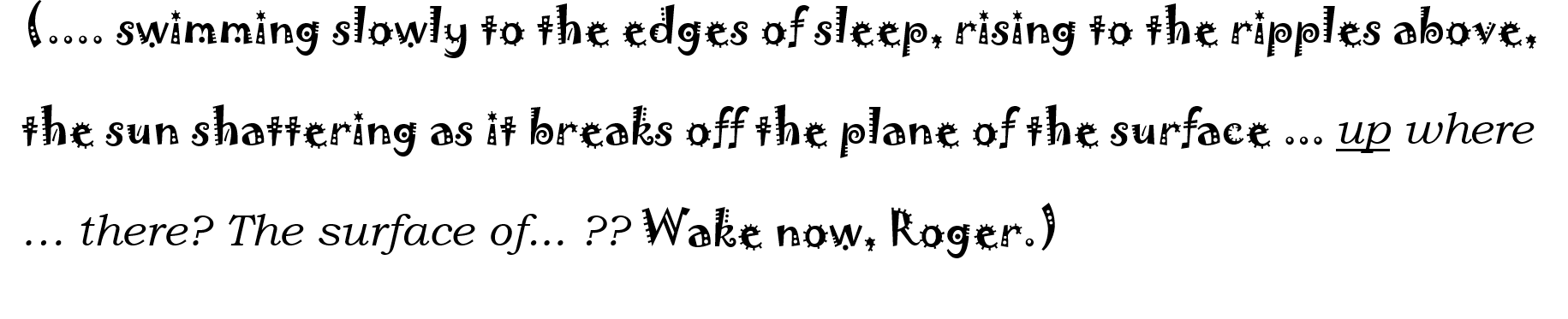
Entering, the morning sun suddenly dims, snuffed out by the lobby’s moist, art-deco gloom. His footsteps ring and echo with liquid force. Roger is underwater now. The darkness undulates from the surface-ripples and sunlight filtering down from far above. A school of fish flimmers by. He turns, slowed by the canvas bulk of his diving suit. A gloved hand reaches out, pushes the button to summon the elevator. He gives three jerks on the oxygen line: upward, he ascends, upward, floating to the surface, to the Seventh and top floor.
As the car creaks up, he listens to all of those hidden cables and pulleys singing with secret labor and negligent power. The sound is hypnotic ... disturbing ... hypnotic …
— ...Uhh! What the f..?
His eyes fall open; the elevator is stopped. He waits for a moment, then kicks at the control panel. The doors don’t move. He pushes buttons to no effect. Finally, he is able to pry the doors enough to squeeze out through the opening. He absently readjusts his clothing as he walks down the narrow corridor, inventorying the progress of decay here: paint peeling off the walls; plaster cracked and gone; lights burned blue; some tile curled up there (That’s new!) nails popped from baseboards. As he approaches the door to his office, he looks at the sign lettered onto the window:
(What’s this? Letters blistered & bubbled up. Is it the heat? The humidity? Seems to be flaking off there. What the fuck? That’s not even three years old! Ok, there’s one guy who’s way down on the list to get paid now!)
These words make Roger feel slightly better. The list of people waiting to be paid is long, and the sign painter had never ranked very high anyway, but now, to have an excuse, a defense other than his own failure, is a tiny victory. He touches the lettering experimentally and half of the “W” falls away, so that now it reads:
A humorless chuckle burbles to his lips: “Attorney at Lav,” reminding him of the “OCCUPIED” sign on an airplane. ATTORNEY IN LAVATORY. Appropriate. The career down the dumper. Lawyer in the toilet, looking for what’s left of that life he crapped away.
—Fuck.
This he whispers with resignation, like a silent, profane prayer. As he unlocks the door and pushes, it’s on his lips again, becoming a fierce grunt now:
—FuuuuucCKKK!!!
... coming louder now, the veins of his forehead popping as he heaves at the resisting door, shoving before it a stack of mail which has been dropped down through the slot over the weekend — Friday afternoon delivery and then Saturday too — now wedged thereunder. Squeezing through, he bends to pick up the scattered envelopes, ripping some as he yanks them out. Roger remembers what an old lawyer had told him once: you could tell how badly an attorney was doing by how little mail he got. By that measure Roger supposes that he must be doing better than anyone in town. But then, these are all bills, second notices and final notices, evidence that the world is threatening legal action against the Attorney at Lav. (Ha! Slide your lawsuits under the stall, I’m outta toilet paper.)
Roger closes the door and scans the ruin of his cramped waiting room. Today everything stands out, highlighted by his mood — the entropic collapse of his life is mirrored here: the coverless, year-old Time and Redbook magazines on the crutch-legged end table next to that worn out couch, its cushions split open and mended with cellophane tape; the ashtrays are full, cigarette butts overflowing onto the thin carpet (maintenance had cut off the cleaning service until the dispute on the rent was cleared up); and the only wall decoration here: an off-kilter painting of a lone, shipwrecked dog standing on a raft in the middle of a churning sea, barking at some approaching enormity.
He crosses this outer room, stepping past the scarred reception desk, opens the door to his inner office and closes it behind. A yucca plant is dying in the corner, casebooks lay open on the floor, the words of law blaring uselessly and arbitrarily at the ceiling. White Styrofoam cups, half-full of day-old coffee, are strewn about like gravestones. Through the eastern window, just beyond those bent venetian blinds, the wrinkled surface of the Illinois River calls to Roger with seductive and fluid tones:
He shakes his head to loosen cobwebs and hallucinatory auras.
Roger sits down. There is a pile of unopened mail at the side of his desk, and he adds this morning’s lot to it. This can’t go on much longer. But then again, what can? Bankruptcy and other end-time realities are close; he can hear the blood-crazed creditors baying in the distance. Even his secretary, Mildy, now openly reads the want-ads at her desk and insists on cash every payday.
He plucks a random envelope from the top of the pile, conjuring, swami-like, and tries to decipher the hidden messages from its signs without opening it. He caresses its rough surface: good quality bond, probably a watermark, return address: HEWITT, MAGEE and Associates. He weighs its heft, gauges the thickness with a caliper pinch of fingers. After handling many such packages and sending hundreds himself, Roger no longer needs to look inside.
Summons and complaint; probably: ACME OFFICE SUPPLY v. FEHLER or some such. Four pages total, with attached a self-incriminating attachment-Exhibit A — something he had signed. Count I: a sum-certain past due on open account; prayer for relief; damages and attorney’s fees sought, pursuant to agreement of Defendant. And then, maybe a Count II: refusal to make timely payments; seeking return of property. Once again, attorney’s fees requested. Boiling down to this: “We want our money back; We want our stuff too; P.S. We hate your guts.” Roger throws the unopened letter onto a smaller pile at his left — those requiring response.
Each unit of mail here represents a different phase of one of the “Seven Steps” in the collection process, which Roger, like all his brethren-at-law, had learned with experience:
(1. The Apologetic Tickler: Sorry to remind you, we’re sure it’s slipped your mind, please disregard if the check’s in the mail;
2. The Stiff Upper Lip: Please pay. Don’t make us beg;
3. The Loss of Dignity: Oh please, please, please;
4. The Strongly Worded Threat: You asshat! if you don’t pay we’ll call the lawyer, he’s one mean sonofabitch;
5. The Final Warning: We’ll do it, we really will;
6. The Professional Approach: Your file has been referred to me for further action. This letter is to give you one last opportunity ... ;
7. Litigation at Last: NOW COMES THE PLAINTIFF, complaining of DEFENDANT...
Roger had once handled collections, working for those Screws at the top of the T&SB, learning, during his two-year tenure there, that no one seriously expected results until Step Seven was reached. The debtors knew this too. And then the bill could likely be negotiated down at the First Appearance (or at least monthly payments arranged).
Suddenly he needs coffee — God for a cup of coffee! — but Mildy has the key to the closet where everything (the filters, the cups, the hot plate) is kept. And she won’t be here for — he checks his watch: 7:35 — she won’t be here until 9:00. Sharp!
[—And why should I get here any sooner Rawger? What’s there for me to do? Why the heck you get here so early?]
Good question. Why did he get here so early, when there wasn’t anything to do except not open the mail, not drink coffee and not think about leaning out of the window too far?
He remembered sitting across the desk from Mildy — interview mode, both of them on their best behavior — he had been fascinated by the chocolate shine of her skin and her 1000-watt smile[2]. She hadn’t sounded black on the phone[3]. He needed a secretary, and she needed a job, so they shook hands and he invested her with the keys and the responsibility for running the office. In those early days, he had the notion that Mildy would magically accomplish all law office mechanics and secret maneuvers of secretarial science; that she would open the office, make the coffee, place the razored and sorted mail neatly upon his desk each morning. He would arrive to the neat stack of phone messages, that atomic smile and a steaming cup of joe — his day unfolding with lockstep precision from innocent efficiency to its lucrative and satisfying end. Clients and profitable business would somehow smell their way to him and all would be well. There would be no rundown and battered waiting room; no weighing of the threatening correspondence, using his legal skills to gauge who got paid and who didn’t; no wretched impotence regarding a cup of coffee at, what? — he looks at his watch: 7:45. Why did he get here so early?
Roger swivels — ear spitting creak here, chair badly needing oil — to his North window, looking across the street at the leviathan and heavily muscled twenty floors of the T&SB, the last five floors coning into that pyramid shape, concentrating its power at the top where Whipper and the rest kept themselves encrypted in their brass and walnut coffined offices.
He can see early shapes moving behind the windows of his old law firm. There. That was his window, his office, where he had sweated out those two years of trying to do what the Screws had wanted him to do. Two years that had eaten away at him every day, corroding the soul. And at night, practicing the skills of serious drinking to heal those wounds (skills learned too well, it seems), trying to forget how he was failing their expectations and his own. Trying and failing; and returning each morning to fail again.
Now Roger’s caffeine need causes him to briefly think of the doughnut shop downstairs. He stands, looks in his wallet, finding only an overlimit Visa card that gets smirks all over town. He checks the pockets of his jacket for loose change. Nothing. (Wait. What’s this?)
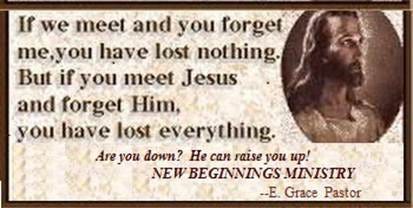
(How’d he do that; get that in my pocket? That old street-preacher must’ve been a pickpocket in some former life.)
He shakes his head, pitches the card into the trash and sits down at his desk, just as the phone begins to ring. He stares at it stupidly, trying to translate this sound into meaning: Ringing? Regular? Wait, telephones ring and there sits such an instrument from which the sound seems to emanate. A call! A telephone call. Who could it be?
Roger silently recalls prayer as an aboriginal technique:
(Please, let it be a client with some money. Make it a retainer, a contingent fee, a paraplegic with a million-dollar lawsuit. Let it pay. Please, let it be something!)
In the microseconds before his hand touches the receiver, Roger swears off drinking, sex, masturbation, and anything else that might convince the god controlling obstacle removal and the revival of failures that he is willing to change his ways — to do what needs to be done now, anything. At the last moment — not taking any risks — he shifts gears and thrusts his hand into the trash can for the discarded Jesus card, clutching it to his heart as he lifts the receiver.
—Hello?
—Fehler! That you, Fehler?
The voice — angry, rolling, bass turned to 10. This is not the kind of call that pays. This is the kind that collects. It is Chester Mackie, Certified Public Accountant, and one of his unpaid creditors. Chester Mackie, expert witness he owes money for that divorce-court testimony last month. Thinking fast — apparently not fast enough — Roger disguises his voice, trying to sound dangerous. He conjures up an imitation of some large black man jangled out of bed, enraged, hungover and ready to kill.
—Fehler?! Wha-th-fuck? No. Shit … that you D?
As soon as it is out, Roger realizes his idiocy. His voice sounds like some bogus cartoon black-face out of 30’s radio talk show. Nobody sounds like that. Nobody ever sounded like that.
—Fehler, you sonofabitch! Goddamn your fucking skin!! What do you think you are, some kinda fucking comedian!?
Roger holds the phone away from his ear as the aural storm conveys into the world.
—Listen to me bub. That check you wrote bounced all the way to St. Louis and back. I want cash by the end of the day or I’m gonna come down there, tear off your head and shit down your neck!
—Hey Chester. No threats now. You know, I record every phone call that comes into this office. If something should happen to me in the next couple of days, who do you think the police’s prime suspect would be after hearing that? For effect, Roger adds a small: “.... Beep ....” under his breath.
Quieter now, more control in the voice, Chester continues:
—Listen Fehler, no more games. I’m not a violent man. I just want my money. Listen, the bill’s four hundred and fifty, prep and testimony. Today only, you give me cash, two seventy-five and I write the rest off.
Roger begins option appraisal: Two hundred and seventy-five dollars is as hard to come by as four-fifty, especially with that other check he just wrote yesterday to fix the Pinto’s brakes. But that won’t clear at least until the end of the week, as it is drawn on that same St. Louis bank, and Mildy doesn’t know about it. He’ll just have to listen to her scream then.
—Okay Chet. Four O’clock. Meet me at Four at the Dolphin. I’ll have the cash.
—Damn straight I’ll be there chump, you worry about yourself!
—Now Chester ....
But the telephone’s informative drone tells Roger that Chester is done with this conversation and gone (S-H-I-T. Nice way to start the day. Okay. What else will go wrong? Everything of course.) Another day at the office, the majority of his time spent fielding calls like that one; and then there will be the weirdos and quacks coming in off the street for free legal advice[4]. There will be a court appearance or two for clients being sued for non-payment of bills, with this trenchant question hanging over the proceedings: ‘If they can’t pay the finance company or the doctor or make the rent, why should they be able to pay the lawyer?’
Roger looks across the street again, finding the window of his old office; a portal into a past world. Back then, back working for Sullivan, Cramer, Rollins & Weldon, SCR&W — the “Screws” — he had started the slow climb in the firm, like all young associates, as a collections attorney, and made his living prying open the wallets of the people who didn’t pay their bills on time. Bad loans, bad checks, late rent, unpaid hospital bills — Roger and his comrades dragged all of these broken promises before the judge and turned them upside down, shaking out money from hidden pockets, shaking out jewelry, shaking out gold teeth if they had them. They employed the jagged implements of legal harassment and torture — the useful Citation to Discover Assets and the greatly effective Writ of Body Attachment — being professional, cool, hiding their cruelty with cold clinicism, stilling their hearts with theoretical words about the fundamentality of ‘contracts’ and the sanctity of ‘our system of credit.’
Roger rationalized his function, as everyone else did. He even tried to believe it — the rationalization: ‘Sorry sir, but it’s not me. It’s my client, that unreasonable sonofabitch. Oh no, nothing personal. I am only a weapon. Lawyers don’t sue people; clients sue people. Don’t make the client pull my trigger.’ This is how lawyers grow hard and compartmentalize what they do.
But when his hand had reached in behind the delinquent account, there wasn’t the expected and clean sneer of a scoff-law, but bewildered, out-of-luck people: old, sick pensioners; young men without jobs and without any hope of jobs; terminal cases complaining of their cancers and willing to prove it to him with tumors; women with moon eye’d babies on each hip; deadbeats who had never meant to pay, wouldn’t even if they could; middle-aged men with a wildness about them, confused and spit out by the factory or the distillery that had closed down and what were they going to do now, Mr. Fehler, what now? And then Roger made his second mistake; he talked about his discomfort, as if everyone else wanted to dissect the excuses they lived with in order to help Roger bear his. He tried to talk it out. He mentioned that he felt dirty. The Screws answered that this was the training ground, where you found out how to do the just slightly hard stuff, so that you’d be ready for the really hard stuff later. He remembered a friendly arm thrown over his shoulder, a quick collegial hug and then lowered eyes that recalled that pain: “We all went through this son, this is how you learn.” But what he learned was he didn’t have courage enough to starve, and he learned that he was willing to participate in evil, to be the final, efficient cause of despair to these marginalized people. Roger learned what he was willing to do for the sake of a paycheck. He just didn’t — and couldn’t — do it very well.
Two years with the Screws had been too much for Roger. Too much for them too: “No killer instinct,” they mentioned; “No heart for this type of work,” they opined; “Hit the road,” they indicated; “You’re fired,” they declared. “Fine,” Roger responded. “You sonsofbitches,” he quipped. “You Screws,” he explained. “You’re a bunch of Nazis anyway. Go to hell.” It was a reprieve, he thought. Almost relief. Yes, they had released him from their demands to participate in their engine of malediction. Sometimes ruined lives get a chance to start over, he thought (rationalizing again). He remembered leaving law school thinking of justice and good deeds, and he wound up as a guard at some concentration camp shoveling bodies into a furnace. But now it was over and he was free to choose one of those might-have-beens, to do what he wanted, to go out into the world and hang up that old shingle and make amends to those he wronged. On the other hand, sometimes lives that have been ruined refuse to start over. Sometimes, that which doesn’t kill you, just messes you up for a very long time. Roger had opened his own office, waited at his desk, ready to save the world, do good and make his living doing it. Then — predictably and inevitably — Roger slowly went broke.
There were paying clients. Some. Enough to survive after a fashion. Enough to pay the most important bills, meaning those creditors that had finally gotten their own lawyers, or had resorted, like Chester, to personal threats. But Roger’s practice brought in only enough money to hold on from week to week, just enough to do a little bit worse each month, so that one more thing went unpaid, and one more failure blistered his soul. But still, it is early enough in his nightmare that he thinks, if he could just get a break. Just one. Even a cup of coffee at — he looks at his watch,7:59 a.m. — his entire life thrown into bas-relief by this inability to get a cup of coffee at 7:59 in the morning.
Where’d he gone wrong? He’d tried it both ways, working for the Screws at SCR&W, and now here on his own. Either way he’d failed. No, was failing. He keeps trying to convince himself, that as long as he holds onto that distinction, there is still a chance. If only something would just break right, if only he could turn it around before it was all gone, figure out the key, learn what they all seemed to know — some special secret, some code word, invoke some system. What he needs is ... ? What? He can’t remember. It all seems a dream.
Here Roger notices slow footsteps coming down the hallway and his ears prick up. It’s way too early for Mildy and there are no other occupied offices at this end. Who could be coming?
(Let it be a client. Let it be the one thing that can walk through the door & save me here. That miracle. That desperate end. Whatever will work.)
Then, bringing all his will to bear on conjuring, Roger tries to change whoever it is: a salesman, a bum, a process server-into that one thing he needs — a case with enough money in it to put him on his feet again, to change his luck, to turn the tide and all other clichés of the moment. Yes, a big case with publicity where someone who has been hurt badly and viciously by someone who is very rich. A dunk! That’s what he needs: A Dunk Winner with a big and famous verdict so that more and more people would find their way to his door to get their big and famous verdicts.
(Like that botulism thing last year at the Mall. That guy made out. Two coma-victims and lots of publicity.)
All he needs is that one good front-page case, that Six O’clock bulletin with film promised by Ten (grave look and careful words into the camera): BUS PLUNGE OFF THE MCCLUGAGE BRIDGE. FAMILY OF FOUR! LONE SURVIVOR SEEKS 10 MILLION DOLLAR RECOVERY! ROGER FEHLER, LOCAL ATTORNEY SPEAKS TO US AFTER THIS BREAK. He squints his eyes, palms flat dawn on the desk, seance-like, every bone vibrating with his need. It must be right. He feels it. The moment is right. It is too perfect of a moment not to be right. Yes. This is the way it will happen; just like this! Hitting bottom and then suddenly, unexpectedly something happens to change everything. Let it come. Let it wash over him.
The door of the outer room opens, and he hears, simultaneously, the courthouse clock beginning to chime Nine a.m., then Mildy’s slow, SouthTown accents. Roger looks at his watch again — still 7:59. He shakes it next to his ear. Stopped of course.
—Say Rawger. Did you see that your sign is falling off on the floor out here? Ah wouldn’t pay that man if Ah was you.
C. Happiest Hours
Roger’s hand comes to his forehead, sweeping anticipatory sweat in the steamy closeness of the late-lobby afternoon, then touches the pocket of his coat where Chester’s money is, remembering that scene with Mildy before he left.
What you mean you leaving? Ain’t no way, Ho-Zay. It’s only Three-Forty! No wonder we ain’t making no money here if you gonna spend your time down at the bar. If Ah gotta stay, so do you!
Then, asking her for the check-ledger, her eyes became slits, rocky fists planted on hips and head wagging in syncopation with her words:
What you need that much money for? There ain’t gonna be none in that account for me at the end of the week! You think Ah’m working free here?
There was a half an hour wrangle until Roger had finally allowed Mildy to go to the bank to assure herself that there was money in the account to cover her paycheck (at least until that Pinto check came back). She’d returned thirty minutes later with powerfully hooded eyes and two hundred seventy-five dollars in cash thickly folded into a brown envelope (for some reason, she had gotten all ones). As he walked out the door, the phone rang and Roger heard this wisecracked answer from behind, more for him than anyone else:
Law Office of Mr. Part-time-Rawger-Fehler. Sorry, no one here right now ‘cept the hired help. Everybody else out havin’ a good time.
Now, pushing through the lobby door, Roger stands on the sidewalk and feels the chill of perspiration trapped on his skin by the afternoon’s super-humidity. He looks at the helpful sign attached to the T&SB across the street, which flashes him this digital information and counsel:
(Five oh One. IRA? Did I pay the taxes? Jesus ...! ...Hope Chester is still there. Hope he’s in a good mood. Fat chance of that. Shit, is it hot, or what? Feels like I could melt down here.)
Surely Chester is waiting yet. An hour isn’t all that late, relatively speaking. Roger heads down Main to Water Street and to the Drowned Dolphin.
*
An hour later, one arm on the bar, you are nursing a drink, leaning forward and peering through the dimness. Involuntarily you put your hand inside the jacket to feel if what’s left of the money is still there. Not much chance that Chester is going to show up now, but just in case, you’ve got your story ready to be given in the correct mode, strategically selected at the last moment through some unconscious gut-reaction you hope to have as you measure his mood on approach, viz:
1. The Shocked & Angry, then Sudden Reasonability Routine. — Two SEVENTY FIVE? I thought you said two TWENTY-five? Hey wait-a-minute buster, you said half in cash … Wait. Wait. No use for us to get hot under the collar here. Whoops. A little short here. How about two fifty and I swing you the rest mañana?
Or:
2. The Your Fault, but Aw Shucks Anyway Diversion.— Chester! Man are you late. I was just about ready to cut outta here. You know, a guy like me has got professional responsibilities. Got to buy a few drinks for the judge if I’m gonna be standing around in a bar waiting on a fella. Buy hey, C’mon. I got most of the dough left. Let me buy you a drink Chester, my man. Hey. See that lady over there? She’s looking at you.
You drain the whisky and, figuring that you’re not going to need either stratagem, file them away for future use. The bar clock states that it’s 6:15, but neglects to indicate the air temperature or give any financial advice. Caution thrown to the side, you order another drink, check your frown in the mirror, then turn back to the Happy Hour crowd.
The synthetic context of the Drowned Dolphin — what’s been called its ‘Nautical Ambiance’ in a local restaurant review (shamelessly framed by the door, with the word ‘cartoonish’ blacked out) — shows evidence of the owner’s puerile and frustrated attachment to the seafaring life and is flavored with a Disneyesque concept of cohesion. It gives you the creeps. Admittedly, the Dolphin’s maritime motif has a superficial justification, being only two blocks from the shores of the Illinois River (but then, eight-hundred miles from any salt water!), thus, the netting hanging from the ceiling; the anchor in betwixt the ferns; the genuine foghorn hooting the beginning of Happy Hour drink and food specials; and the waitresses’ skimpy pirate costumes, complete with inconvenient eye patches (destroying depth perception so that collisions with customers and other waitresses are common), are all to be expected. But the Dolphin has taken the theme-bar concept to a new order-level of high kitsch. Your voice falters at ordering a whisky and soda by its Dolphin name: a “Hornpipe” or a “Shark-burger” (Enough for the Great White Appetite! Comes with Barnacles and a Pickle-Spear). At the Dolphin you don’t ask for the washroom, you inquire after the Boson’s Closet or the Widow’s Walk (“the Head” was eschewed for obvious reasons). And you’re tended to by employees somehow indoctrinated into this buffoonery, who ask if “Ye want another, Matey?” or “ARRRRRR! What’ll it be landlubber?”
Then there’s the logo of the bar; a bottle-nose dolphin floating upside down on a sea-blue background, inexplicably dead and smiling. This shape accosts you from every glass, each napkin and coaster, the windows, the lampshades, those T-shirts; there’s even a real inverted dolphin centered above the bar, lacquered nicely, happily deceased. A polo shirt, the expired mammal monogrammed over the left breast, can be purchased at a glass counter near the door, presided over by an unexplained, too big to move, stuffed grizzly bear which stands seven feet tall and silently snarls at its impotence now that some former theme has rendered it meaningless and surreal.
But you might even be able to stand it if this were not the only inanity abroad at the Drowned Dolphin; no it gets worse. The parody somehow is also forgotten; consent and approval are actively given by the Happy Hour crowd, in fact there is eager participation. It’s the acceptance of all this which galls: the failure to stand up and call the comedy to task, to demand an explanation for this insult to the archetypes of taste and fakery. Yes, they like it this way, they would rather believe the fiction, it’s more fun: “Hey Cap’n! I’ll have a Raft of Whale’s Tail and a Drunken Sailor, no ice. Two orders of Peglegs and some Doubloons on the side for me and my wench.” Nor can you refuse to join in. Spoilers — those who won’t call a martini “Ahab’s Revenge,” or a beer “Bilge Water,” — are either “Keelhauled” (made general fun of) or have to “walk the plank” (shown the door). There is serious theme-park fun going on here at the Dolphin; de rigueur jollies; the adoption of new codes based upon the chosen jokester-myth; a gag stripped of its humor; commercial laughs, where money and goodtimes are merged, and you have to play.
The Dolphin’s skin-crawly phoniness has always unsettled you, but then most of the young attorneys and other professionals in town hang out here; as it’s still trendy, it’s dark, full of women, and, for the idiots of the world, it’s hilarious. The Dolphin had been one of the hangouts you had gone to when you were trying to fit in with the rest of the world, working for the Screws. And it’s handy to the office; not to mention the excuse about old habits dying hard.
You are groggily looking out the window at the Illinois River. A barge slides by, its lights just coming on. Corn or beans or some other thing headed somewhere else to be consumed. You watch it skim the river ...
—Roger?
You hear this sound clearly above the tavern-babble, spoken quite close by, even at your ear. Your processing center tells you that this is right — you are Roger. Who calls?
—How ya doin’ buddy. Long time no see.
You turn and it’s — Oh no! Oh, shit! Him! — Paul Johnson Sloan. PJ. Pee Jay. Pajamas Sloan, former friend and good-old/bad-old days’ confidant, now a fantastic asshole success story and reminder of all the failure of these last three hard years of trying to make it solo. PJ, nickname from yesterday when you had worked together for the Screws as young associates learning what it meant to be attorneys; learning the horrible secrets of aggression never taught in law school. PJ, best friend from prehistoric times when the world was still a possible place, where things could work out, where everyone could win. Now he’s only painful glances in Courthouse hallways if you should meet, and fretful nods passing each other coming in or going out of a courtroom. Even these brief and accidental crossings occur less and less now that PJ is on the cusp of making it — rising in reputation in the local legal community, making a name for himself, soon to make partner at SCR&W — and doesn’t spend much time on the cheap side of the Courthouse: in Small Claims (Small Change Court you called it back then) or Family Court, where you, yes you Roger Fehler, are stuck for the rest of your life, and happy to get even those piddling little cases you sorry sonofabitch.
Here he is. Big, friendly golden retriever smile like you remember and hand pressing at the shoulder as if he’s really glad to see you again.
—Roger. How ya been? Ain’t seen you ‘round for ... (he seems to be searching for an appropriate and clever figure of speech, but fails.) .. forever, man. What’s been going on?
You hear yourself answering:
—PJ! Hey! How’s it hanging? Long time. Where you been keepin’ yourself?
—Nowhere. Hell, right across the street as usual. Y’know, burnin’ the midnight oil. They keep me hard at it.
Oops. This is not very smart of him; bringing up the Screws and how he stayed behind. The ability to converse suddenly nosedives into a chasm of shared bad memory. Silence. Eyes averted, neither of you wanting to acknowledge the existence of that glittering fact vibrating in space between you: that They — his present, your former employers, the bastard partners, the Screws (especially Whipper) — fired you, labeling you unworthy, useless and a waste of their time. In fact, they were unanimous in the opinion that it was time for you to seek other employment, “Oh, and by the way, your best friend can stay, Rog. We like him. He’s got what it takes. And don’t let the door hit you in the ass on the way out.” Your mouths gap about for words. PJ finds some first:
—How’s that crazy dog of yours? I haven’t seen you in here for a long time. Well, hell. Let me buy you a drink.
Ok, what can you do now? It wasn’t his fault, after all, but you do blame him: remaining behind is like choosing sides, and he chose to stay. There’s no escaping that you hold him responsible for his survival and success, somehow at your expense-as if he were a vampire who sucked your blood and left you alive but weakened. And now he, the inverse effect of your failure, wants to buy you a drink, with their money, almost as if it’s coming from their pockets, bought by them-“No hard feelings, huh?” And when you think of how the first swallow might just be a little bit of letting the bitterness go, and that next swallow is grudging acceptance of all that’s happened, and this final one is agreement with the way things turned out, you choke. He notices.
—Something wrong? Okay? Why so glum, buddy?
—Glum? Uh ... No ... ahh ... just ... hell, now that you mention it, I got stood up by a client that was supposed to meet me here. What can ya say?
You hold your hands out, palms up, shrugging in a gesture that you hope means: “The idiocy of the World. We all know it. What can you do?” But you are not convinced that you have a handle on the meanings of simple gestures any longer.
PJ and you had once been close, hired together — same-day twinsies! — as first-year associates, fresh out of law school; You both felt the same way. You talked about the rationalization for the job. You both hated collections work: sharing confidences and fears on lunch hours and then late-night drinks at the town’s bars or one another’s apartment. You remember him telling you to buck up, it wasn’t that bad, it was tough but you were doing okay. Just swallow the rationalization, Roger. (He didn’t call it that. It already owned him.) He was your friend, your bud. (Best buds!) His assurances kept your panic at bay. Hell, it wasn’t like they were going to fire you or something.
But then they did fire you. Despite P.J.’s assurances and your own dark joking aside that you hoped might somehow protect you against the inevitable future that you knew was coming, they fired you. You remember: the Senior members courageously delegating the dirty work to that nervous Junior Partner — they had probably hugged him collegiately, mentioning that “This is how you learn, Tom.” — who came painfully into your office, sitting down in the chair where clients were supposed to sit, mumbling his way through the words that had finally done you in:
Uh ... we had … Rog, you know that at the partnership meeting at the end of each year we bring up the ... name of each associate and uhh to see if he is developing along the ... ah ... lines that we expect ... we ... ahh … just don’t believe you are “thriving” in this environment.
Thriving! As if you were a plant that needed sun or better dirt. Or an animal, failing to respond to a special diet of greed & cruelty. You were being culled. Winnowed. Weeded.
That night you got drunk with PJ, starting here in the Dolphin, then continuing into other bars, ending finally at home. There had been loud epithets and words of malice while the arms were swung about in a swashbuckling manner, there was laughter and cursing. At one point you had said that this was the best thing that they could’ve done for you, they had set you free. Someone (Who?) even suggested that PJ quit the next day and you would set up an office together. “Capital plan! Just the ticket. Capital, yes capital!”
Bravery comes at night. Bravery and foolishness. Caution returns with the sun, riding the solar corona into the bloodshot sky. Those hot, late-liquor speeches giving way to sobriety and early-morning retractions of silence — reality seeping back in. Then there was a shocked silence as the cords of your friendship were tested, they stretched and then snapped. What happened? Who’s fault was it? Soon there seemed fewer things that could be talked about without hitting those tender scars healing between you. Long silences began accumulating around centers of angry-brink words. It was hard to be normal again or get back-no matter how you tried-to that shared feeling of trying to know the same things and find agreements about the world, and about yourselves. To learn to fit in when you had known all along that you were different and never saw things the same way that they did ... that he did ... that all of them did ... and you never would.
PJ and you got together less. Sloan & Fehler or Fehler & Sloan weren’t discussed any longer. Soon it was too painful; he stopped calling, or you did — the phone remained cool to the touch. You found other things to replace him: loneliness and liquor. Depression. Internal dialogues.
—How ‘bout another Rog?
No one called you “Rog” now. That was your bad-old-day’s name. Now its Roger Fehler, dammit. They called him “Rog” over there. The Screws called him “Rog,” they renamed him, relabeled him and tried to turn him into something that they wanted him to be; just as they renamed Paul Sloan into PJ, as if that had always been his name. Now, here is the dark symbol of those days, that last bridge with the past, the final Judas, calling you “Rog” and buying you another drink with their money. A stinging bitterness that you thought had been time-softened, starts to swell inside; you can feel its brittle edges, sharp as ever, cutting you as it grows. Fuck him! You don’t need his linen suited looks, his silk-tie sidelongs, his Glenlivet glances, suspendered, wing-tipped, cuff-linked, button-downed stares and smirks. You know what he’s thinking, seeing you standing here with sweat crusted at the armpits of a shirt you wash out by yourself, a polyester jacket that the lining’s going out of, drinking bar whisky. He can’t believe how far you’ve fallen. That’s what he’s thinking. And pity, that’s what he’s feeling. You know because that’s what you’re thinking, suddenly faced with the past and this differential present, you find words:
—It’s Roger. Not “Rog”.
PJ’s eyes go empty and his smile freezes latitudinally; somehow the message’s gotten through. What else did your face say, or was it in your tone, your eyes? He backs away, using crayfish, subtle moves, promising to keep in touch, to give you a call, to send some business your way. He is gone; he has always been gone. You are alone again. Why don’t you feel better?
Spatial reality has suddenly compressed time has gone squarish, become roughhewn, unstuck, & lost its rhythm and mileposts. You’ve drunk too much again — that last drink did it. There’s a film of cellophane between you and everything else now. It’s that point when you realize: Whoa, I’m really drunk. Huh? How did that happen?
(Fuck me. How’s it hanging? They might just find me that way. Man. When do I get a break? Imagine that ... running into that jerk. Could today get any ...? Just one more for the road. Hey! Someone left a Shark-burger. Take it home for Zero. My bud, Zero.)
—Hey pal ... uh ... Long John .. yeah that. Can I have a doggie bag for this? Okay.... Arrrrr! Ha ha.
You look into the mirror behind the row of jeweled liquor bottles at the reflected crowd of downtown workerbees: bankers, secretaries, insurance people, courthouse clerks, still here at it, at what? — 8:47! — after flowing out of their offices and into the bars to loosen up, pound down a few, chat up a little business maybe, eat some high-caloric appetizers and give another dreary day a high point. At least that was the excuse. Happy Hour! Let’s be happy. (How’s that happiness thing go again?) The secretaries think they will be happy if they find businessman, or something, to marry so that they won’t have to be secretaries anymore. And those businessmen will be happy if they can lure the secretaries, or whatever, into bed, making a point of not marrying them afterwards. Then there’s always the alcohol to grease the skids towards these goals of imitative warfare and control positions, of security, of sex. But even if it all comes to nothing, even if she gives up without a pledge of forever, or holds out until an actionable breach-of-promise is committed, even if you all must go home alone, one escape can still be bought cheaply enough — another drink to make you happy; happier; happiest! Sex and booze, the great escapes; these fleeting, brief, and illusory commodities rendering your miserable life bearable these days. Happy hour. Barkeep, I’ll have another shot of that happiness.
Now, you are aware that the next barstool has been filled; someone touches your elbow. You turn. Here is a young woman, maybe late Twenties-smiling, no, leering in your direction. She seductively moistens her lips with a prehensile tongue, advertising its talents, and opens her mouth, saying in a breathy, TV commercial voice:
—Hi. I’m Candi (with an “i”). By yourself?
She’s a bit heavy — twenty or twenty-five extra pounds that she tries to hide or use depending upon their location — not really attractive, but making a fair attempt at attractive, assisted in this effort by the strategic arrangement of clothes, posture, the low light and the booze. Her hair is blonde with streaks of red and a different, unreal black-blue in it. (Omigod, tricolor hair!) Her blouse is open to the sternum, logically accentuating ample cleavage, and there has been the application of make-up, completing an elaborate fiction that’s been expertly learned, unartfully exuded. Yes, here is that dripping offering: a smile, her eyes, the way her leg moves lightly and touches yours with the jungle-telegraph of: “Go on honey, just ask. Don’t look any further. Here’s tonight’s dream come true. Everything you’ve been looking for is here. And more.”
You consider it; it’s an escape. Something to make you, for a little while anyway, forget everything else. But then, wasn’t there something about turning over a new leaf? Getting a good night’s sleep? Choosing to change your world tomorrow?
The woman is now slowly rolling her tongue around the rim of her glass, a maneuver full of implications and terror. Suddenly, you see cinema trailers with those hefty thighs wrapped around your neck, throttling your life away: “Coming to a bedroom near you. Thrills. Chills. Fun for the entire family. Absolutely no one will be admitted during the final, terrifying minutes of this fantasy — Filmed in OrgasmaVisonTM.” You turn towards the door — escape mode: run Roger! Run far and run fast! — but then she says:
—Can I buy you drink?
Which of course derails you; traps you. What makes you stop? Chronic bad judgment? The momentum of misfortune? Today’s horoscope? It doesn’t
matter. What matters is whether to decide to chew your leg off and flee or to go back. If you were smart ... but you’re not ... you would ...
Turning around, you goof an unexpected smile that feels like a wince, then say:
—Good idea.
After all, considering everything, more liquor might be just what you need right now.
D. Secret Dreamer No. 2
—Wha ... wha … whup!
Roger is instantly and fully awake, suddenly aware that he is in his bed, that he is soaked through with sweat, and that someone’s arm is flopped heavily across his chest. That someone now lustily snores into his ear with the deep, wicked rumble of a car stuck in the mud.
--HHHHHoooocccchhhhnnnnnnnnnnnnn!!
Roger shuts his eyes, trying to recapture the fragments of that dream still buzzing in his head. He remains still, blinking and watching what’s left of its images play themselves out on the darkness behind his eyelids. (What? What was I....?) He strains to see them, but all that remains is a vibration of his mind and the static-charge of quiet between those obscene snores; something is there just out of reach of consciousness: a significant note, the afterglow of some insane night music, a background rhythm, a singular silent-noise. But it is too fragile. Now it’s gone, fractured into a million transparent pieces by awareness, by the snoring, and by trying too hard to remember — as if memory were gutted through with false bottoms.
Roger raises his head up slightly to squint at the digital numbers redly pulsing from the clock on the nightstand. He gives a short grunt of exhaustion and drops his head back onto the pillow (3:00? Shit, not again. Fuck!) but bites these words off before they became sound. He does not particularly want to wake up What’s-Her-Name now that he is somewhat sober, painfully so in fact, and full of regret: the previous night’s frolic rewinding for him in lurid flashes of video-memory detailing the Several Levels of Hell through which he has descended with his bed companion. (What was her name?) And even if recent memory could be wiped clear there would still be sensation: the thumping in his head, a raw and abused feeling at his crotch and — Wait-a-minute! — the suspicion that some of his bodily orifices have been stretched beyond their limits! But there’s the upside, the silver lining: maybe this time he had caught something dangerous and fatal.
These thoughts are blasted sideways here by another window-rattling snore issuing from the soft palate of ... (What was her name, anyway?) ... the earthy sound fitting everything he can remember about the woman he’d picked up tonight. Or had she picked him up? (It was something starting with a “C.” Something sexy & a little too cute. Cammy? Cherry?)
But it wasn’t the snoring that had snatched Roger awake, it was something else, some dream, no, the dream – the Nightmare!
(That nightmare: dread and foreboding regarding ... what? ... the future? No, the past too … And the now. Everything! Everything is suddenly too short, too sparse, too limited — the lines have been drawn by life too thin to see … the world spinning away … there’s no time remaining, no power, no knowledge … nothing left to win with anymore.)
This dread — a dread, correlative with the Nightmare has snaked again into his sleeping mind in the shape of images and sounds and feelings he can’t recall. The Nightmare cannot be remembered; the dread cannot be forgotten. And there’s no sleeping now.
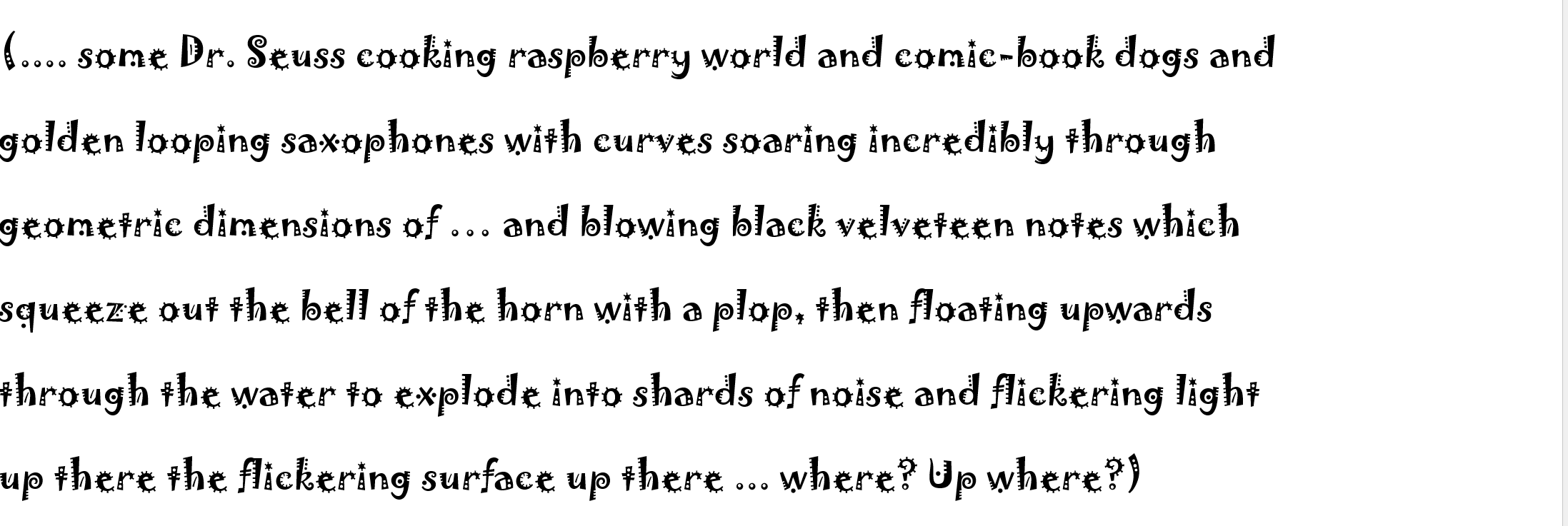
Roger can’t tell if the plot of the Nightmare is some recurring scenario plaguing him, or variations on a theme. This much he remembers, music, saxophone music, and looking at the surface of water from below. The music and the water, that much is constant. And it’s the water that unnerves him, considering that daydreaming River-voice he’s been hearing lately. Is he losing his mind? Disturbed by a dream he can’t even recall? Maniac nightmares? Nocturnal psychosis? On awaking, Roger always feels incredible despair, a fear of going forward, a fear of standing still, ready to throw up.
All that’s left to him is the dread that his life is swirling toward a hole with no bottom, an oubliette, a void where last-minute miracles cannot exist. Where the world ends.
He gets up. He has to. Can’t stay here. Easing the heavy arm over off his chest, Roger slips out of bed. Perspiration makes his skin feel immediately clammy and he shivers. The sculptured carpet of his bedroom feels like worms working under his bare feet as he makes his way to the door in the dark. Behind him, he hears the sound of an animal rolling in the surf, wheezing out stale air through a blowhole. (Candi (with an “i”)!) That was it. Smiling over the salt-crusted rim of her Margarita, “Hi. I’m Candi (with an “i”). By yourself?”)
—Hey. (Sleepy voice following out of the darkness.) Where you going?
—Take a leak.
—Hurry back honey. (Giggles.)
The groggy giggle emerging from the bed convinces Roger that he will definitely not hurry back. He waits at the door, counting her respirations until they become regular again. Then he closes the bathroom door quietly behind.
In the darkness, Roger pulls on a pair of sweatpants, switches on the light and frowns at the glare thrown back at him by the mirror.
Here are two dimensions of Roger, looking at each other through this breach between their Universes. “Hey you. How is it over there? Any better?” “Nope, the same shit, only in reverse.”
Here, look at this. And they each look: the remembered, shared body, once young and lean and hard, now is flabby, white and defeat-hunched; his face, which had been round with babyfat, threatening jowls now; deepening nasolabials; small wrinkles clutch at the corners of the eyes. Roger leans in close to the mirror and touches a retreating hairline. (What?! More hair gone?) He massages the scalp — improved circulation might help. Beta-Roger does the same. Rubbing fingers in front of their eyes, they see sickly hairs fall. These pluralities of Roger look at each other here, apologetic and accusing. Along with everything else — his floundering life, impending bankruptcy, those daylight alcoholic River-siren hallucinations — this shared body is falling apart in front of his eyes. Time has aged him; even time itself is older now, space-time has captured his mass and suddenly we see the lonely image of Roger Fehler, teetering on the event horizon of a black hole.
He exits the bathroom and walks to the kitchen, feels for a glass and his bottle, takes some ice from the freezer and walks into the dark living room. All this time, there has been a white shape ghosting his ankles, shambling, dog-like after his master. Roger’s toe stubs itself smartly on something in the dark.
—Shit!
It’s the saxophone on the floor again.
(Should take that damn stand back. Good for nothing. Sax always on the floor. And how’d it get over here? Another chewed-up reed?)
He replaces the horn on its stand and checks the bedroom door before turning on the light, the room jumps up around him with brilliant edges; hard, golden jewels of light on the mechanism of the sax. The dog lowers his head and his eyes squint but then adjust; he watches the man quietly. Roger turns a dimmer switch, and the room becomes softer, intimate, deep. He thinks about playing some low and passionate notes on the sax, a solo he once knew, but then he remembers the sleeping woman. He’s not sure he could still play it anyway. How did it go?
Roger pours an unnecessary drink, sets the whisky down at the side of his chair, stands and takes the instrument in his hands. The cold metal warms and grows vibrant, melting like a liquid into his skin. Sitting down before a window view of the Downtown, he begins to finger the keys: open, close, open, F-sharp, F, run this arpeggio: C-D-G-C; his lips on the black mouthpiece, a silent kiss of valuable breath, thinking in improvisational, associative jazz terms. He recalls his brother from the mirror.
(Now my friend, where are we? It’s not about being young or getting old and dying. It’s about falling into chaos. Fucking up big time. Not leaving a mark; not even enough of a mark that anyone would know you were here. “Roger who? Fehler? No, can’t say I ever heard the name. My son, you say?”)
All of the sudden thirty-four is old; yesterday’s superman youth gone, and today he is somehow ancient, despicable, ruined; rendered dead by his context: his unstuck life seems over, helpless, spinning out and falling. If he was well on his way to making something count, a name, a reason for being alive, then there would be hope. But instead he’s flowing down the drain, counterclockwise, contrary to all laws of physics for this hemisphere. The smallest things are now impossible and that jackpot-just-around-the-corner feeling is gone forever.
Tonight is the Final Jeopardy round for Roger. A crunch of fear has come to sit on his heart. And something is finally and irreparably broken. Spirit. (Let’s call it spirit.) Roger has lost a part of himself, that part that once told him that there was lots of life to live; plenty of time. Mistakes, which had once been insular and isolated, now are cumulative, each small error now maybe: That. Last. Straw. He sees that all the surprises are used up — they are all gone — and that he, who had been a child all his life, could get old, and that he could die without doing that one thing, whatever it might be, that would mean something.
That Nightmare is a part of this inner collapse. Once, Roger had thought that if he could only unlock the Nightmare’s message, or as first step, at least remember it, he could think his way out. He knew it was telling him something. He was sure that there was some clue …
(… some puzzle piece that solved it all: the Nightmare-the dread-life. Didn’t someone say that all mysteries had solutions?! Nothing ever comes of questions.)
Roger here knows something: if he had a gun he would use it tonight.
And now, he plays out his ritual — Roger has done this many times. He picks an invisible revolver up from the table. He wills himself to believe it’s real. He slowly loads the chambers, each bullet carefully placed with a mechanical snick that he can hear. This is his ceremony that he uses to gauge the depths of his despair by whether he actually pulls the trigger at the end. He has never pulled the trigger before. And it only works if he really believes there is a gun in his hand. Now he feels the weight of it; smells the gun oil and the dime sized impression at the right temple. (Jesus! There really is a gun in his hand! Not a pretend gun. He has a real fucking gun! LOOK! Where did this come from? When did he get that? (... Oh ... shit, yeahhhh.)
Walking from the car. Chester’s money. Back-alley commerce and a furtive transaction with that dark figure always hanging about the building:
Hey mister, got some pot here! Got some blow! Whatchoo want, I can get it for yoo … A gun? Whatchoo need a gun for? Ok, how much you got? 200? Wow! It just so happens I got a gun here that is a-200 flippin’ dollars. Here, take a look. Feel that weight? That’s quality. Don’t worry about that; polish right off. It shoots fine, believe me I know. You got a roll there-all ones? Oof! Sure, I got the ammo, but you don’t load it up here, okay? Not till I got myself gone. See the bullets in the baggie? I’ll put them over there on the ground. What’s the young lady’s name? Oh, Candi (with a “i”)? Oh that’s cute! You a cutie too. Yeah you are. You guys gonna have some fun tonight? I bet.
Roger places the gun back at the side of his head.
(Okay then. Straighten the arm to ninety degrees. Don’t fuck this up too. Right through the brain. No wait. Everybody moves at the last minute & just ends up a sad attempted suicide with a ditchy-scar through the scalp. In the mouth is best ... top of .. the roof of the …)
He tastes the icy metal. He can feel the ions of the steel causing a tingle of a tiny electric charge on his tongue. His hand shakes but the finger on the trigger is firm. The white dog looks up with sudden interest ... is he eating something? ... BLAM! ... the dog jumps backward onto himself and scrambles behind the couch. Behind Roger’s ruined head, the wall is splattered with red gore dripping and clotty brain pieces. His eyes stare at us, the smoking gun resting on his chest. In the bedroom, Candi (with an “i”) bolts up: “Omigod, what is it? What happened?” holding the covers around her naked body.
{Oh people! Oh Fuck! … urp. Pardon my French, but Roger’s killed himself! Right there in his chair. Damn. He’s dead. Fucker actually killed himself! Saxophone on the floor. The dog shivering behind the couch and Candi (with an “i”) on the phone to 911. Brains slubbering down the wall; blood and stuff everywhere. Who saw that coming? What now? ... who’s going to ...? ... What ... Wait! Wait. Waaait-a-minute! That’s not a gun. That’s his finger. That’s his finger was in his mouth. We ... ? He ... ? Ha!
Whaa?... Are those tears?}
He has never pulled the trigger before. If he had a gun tonight, he would have used it. A line has been crossed. This hits Roger hard. He becomes visibly smaller. Refracted. The room seems dimmer as the despair soaks up the light. His image wavers in the cold, deep night. It’s as if we are viewing him through the prismatic effect of ... of ... water. Down in those depths, his fingers are remembering that solo on the saxophone, which he has to his mouth again, but he doesn’t have the strength to blow. This is a dangerous time for him. It is possible that the dread has won, that his hidden hope is really, finally gone.
Let’s pull away for now. This is enough. The man sits in his chair silently fingering the keys to a dumb saxophone; his eyes glitter in time with the light sparkling off the metal. The dog is standing next to the chair, his nose in the glass. And all we can hear as we fall away from the window are these sounds of portent:
1) Ragged breathing, almost sobs;
2) Silent, unplayed notes from an alto sax;
3) A dog lapping, its tongue snaking among ice cubes for the last of the whisky;
4) And the background noise of the future as it approaches.
[1] The Orphéon, seven floors of decrepitude, only half occupied, is a fragment of Peorian history; once bustling offices selling insurance, lending money, and producing the zesty vaudeville circuit that linked Peoria to St Louis, Rockford, Des Moines and Chicago. Built soon after the T&SB, it displays none of its sleek power or strength, even though its construction was partially completed by leftover materials from its comely neighbor’s creation.
[2] Roger had grown up in a quiet little town 41 miles and 50 years ago from Peoria. White and Protestant, there were no Black people – negroes they called them in polite company – in Cuba, Illinois. He didn’t meet his first Black person until that tiny woman who sat next to him in Contracts in Law School. He had been surprised at her cleverness and humor. Roger was so naïve about racial relations that he didn’t realize she had a crush on him.
[3] She informed Roger that she had worked hard at her diction during her years at CISSI (Central Illinois Secretarial School & Institute), because she “didn’t want to sound like a Southside n.. resident.” But she had never known a Rawger before, and to keep from calling him something that rhymed with “Kroger,” she thought of raw vegetables: “Raw-ger,” and it still came out that way.
[4] Like that time that potential client wanted Roger to get a patent on his secret invention, so secretive and paranoid was he, the potential client, that is, that he wouldn’t tell Roger anything about it for fear his “million dollar” idea would be stolen, and he skittered away.
Thanks for reading The Monkey Wrench! This post is public so feel free to share it.